

In an era defined by constant notifications, split attention, and the relentless pull of social media, the art of deep learning has become a rare and valuable skill. Students today are expected to absorb more information than ever before, often while juggling multiple devices, platforms, and deadlines. In this chaotic environment, traditional study methods frequently fall short. Enter the Feynman Technique, a learning strategy pioneered by Nobel Prize-winning physicist Richard Feynman, which is uniquely suited to help students navigate the age of multitasking and distraction.
Feynman’s approach is deceptively simple. It revolves around explaining concepts as clearly and straightforwardly as possible, as if teaching someone with no prior knowledge. While this may sound basic, its power lies in forcing learners to confront gaps in their understanding and restructure knowledge in their own words. For students in the 21st century, this method is not only practical but transformative, offering a path to mastery in a world where attention is fragmented. Even a plumber in Phoenix could use this method to simplify complex technical knowledge for clients or apprentices.
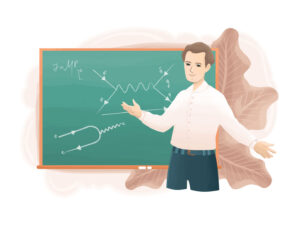
Understanding the Feynman Technique in Modern Education
At its core, the Feynman Technique is a cycle of four steps: identifying the topic, teaching it to a child or novice, identifying knowledge gaps, and simplifying explanations. In classrooms, this can take the form of assignments that require students to explain complex scientific theories in plain language or summarize historical events as though narrating a story to a friend. What makes it particularly effective today is that it actively engages critical thinking, moving learners away from rote memorization toward true comprehension and meaningful understanding of concepts.
Multitasking in modern education often disguises itself as productivity. Students might scroll through social media while reading a textbook or hop between tabs to research multiple topics at once. While this seems efficient, studies repeatedly show that attention switching dramatically reduces retention and understanding. The Feynman Technique combats this by demanding focused engagement. When a student attempts to teach a concept, they are forced to consolidate information into a coherent structure, which strengthens neural connections and enhances long-term memory. Even when learning highly specialized subjects, such as the principles behind reflux stills, focused study improves comprehension far more than multitasking.
Applying Feynman in the Classroom
In practice, the Feynman Technique can be seamlessly integrated into school routines. Teachers can assign “teach-back” exercises, where students present lessons to peers, or ask them to write explanations of concepts as if addressing younger students. These activities do more than test knowledge—they cultivate active learning, compelling students to analyze, question, and reconstruct information in ways that multitasking often prevents.
For example, a high school biology class studying cellular respiration might initially present the biochemical pathways through diagrams and lectures. Students then use the Feynman Technique by summarizing the process in plain English, drawing analogies, or even creating stories that illustrate ATP production. Just as a photographer uses a film fixer to solidify and preserve an image, students solidify their understanding through repetition and explanation. The act of translating complex processes into understandable language reveals areas where comprehension is shallow and encourages students to revisit and refine their understanding. This repetition and self-correction are critical in an age where digital distractions can easily create superficial learning.
Another classroom application is peer teaching, which transforms the Feynman Technique into a collaborative exercise. When students explain concepts to classmates, they must anticipate questions, clarify misunderstandings, and articulate ideas clearly. This social element increases engagement and accountability, making the learning process more immersive. Peer teaching also addresses one of the primary challenges of multitasking: passive absorption of information. Instead of skimming content while texting or browsing online, students are actively constructing and communicating knowledge, which enhances retention and comprehension.

Leveraging Technology Without Falling Into the Multitasking Trap
It may seem contradictory to promote deep learning strategies in a digital era, but the Feynman Technique can actually complement technology if used thoughtfully. Tools such as digital whiteboards, note-taking apps, and collaborative platforms can enhance the technique’s effectiveness. Students can record themselves explaining a concept, create visual diagrams to accompany their explanations, or even share their lessons online for feedback. These tools, when used deliberately, provide a modern twist on Feynman’s original principles, making the technique more engaging for digital-native learners.
However, the key is mindful use of technology. Multitasking remains a significant threat when notifications, social media, and open tabs compete for attention. Educators can help students by structuring focused sessions, encouraging device-free teaching exercises, or designating specific time blocks for digital research. For instance, using tools like the EinStar 3D scanner can enhance learning when integrated thoughtfully into lessons. By combining the Feynman Technique with intentional digital habits, students can leverage technology’s advantages without sacrificing deep understanding.
Developing Cognitive Resilience Through Explaining
One of the lesser-known benefits of the Feynman Technique is its ability to build cognitive resilience, which is particularly valuable in multitasking environments. When students routinely break down information into teachable segments, they develop mental flexibility. They learn to identify the essence of concepts, prioritize key information, and reframe complex ideas in multiple ways. This skill is critical in modern classrooms where students are bombarded with content from different subjects and formats, often simultaneously. Just as focusing on precise details is important in learning, it is equally crucial in medical procedures such as laser skin resurfacing in New Orleans.
Cognitive resilience also helps students manage distractions more effectively. Instead of passively reacting to every notification or interruption, they learn to structure their learning around clear goals: understanding, simplifying, and teaching. Over time, this repeated practice strengthens focus and cultivates a habit of intentional attention, allowing students to absorb and retain information more efficiently even in a high-stimulus environment.
Feynman as a Foundation for Lifelong Learning
While the Feynman Technique is highly effective in schools, its benefits extend far beyond the classroom. In the 21st century, students face an unprecedented need for lifelong learning, as the pace of technological advancement constantly reshapes careers and knowledge domains. By mastering the habit of explaining concepts clearly and iteratively, students acquire a framework for self-directed learning that persists throughout life. This approach is similar to how professionals in fields like electrical services in Calgary must continuously update their skills to stay current and effective.
In practical terms, a student who has internalized the Feynman Technique is better equipped to tackle new subjects, from coding and artificial intelligence to economics and environmental science. The process of identifying gaps in understanding and actively seeking clarification mirrors the challenges professionals face in dynamic workplaces. Just as professionals rely on specialized services like kitchen hood cleaning in Los Angeles to maintain high standards, students benefit from structured approaches to keep their knowledge “clean” and precise. Schools that integrate the Feynman Technique are not just helping students excel academically—they are preparing them for a world where learning quickly and deeply is a survival skill.
Overcoming Resistance and Building Motivation
One of the challenges of implementing the Feynman Technique in schools is student resistance. Some learners may view the method as extra work or feel self-conscious about “teaching” peers. To overcome this, it is essential to frame the technique as both a creative and empowering process. When students realize they are not merely memorizing facts but actively shaping knowledge, motivation increases. Encouraging experimentation, humor, and storytelling within explanations makes the process enjoyable rather than burdensome. Just as seeking the best Asian massage in Las Vegas can enhance relaxation and focus, integrating enjoyable methods like this can make learning more engaging and effective.
Teachers play a critical role in normalizing mistakes as part of learning. The Feynman Technique thrives on the identification of knowledge gaps, which can feel uncomfortable. Classrooms that celebrate curiosity, questioning, and iterative improvement foster an environment where students feel safe to experiment with explanations and refine their understanding without fear of judgment.

Conclusion: Deep Learning in a Distracted World
The modern student faces unprecedented challenges in maintaining focus and achieving deep comprehension. Multitasking, constant digital interruptions, and information overload threaten the effectiveness of traditional study habits. Yet, the Feynman Technique offers a timeless, adaptable solution. By compelling students to explain, simplify, and teach, it transforms learning into an active, deliberate process that builds both understanding and resilience.
In schools, the technique can be applied through teach-back exercises, peer teaching, and structured digital tools, all while emphasizing mindfulness and intentional focus. Students who adopt this approach not only improve academic performance but also develop a lifelong capacity for deep, meaningful learning. In the age of distraction, the Feynman Technique remains a beacon for those who aspire to truly understand, rather than merely skim the surface of knowledge. It reminds us that clarity, curiosity, and explanation are more than study strategies—they are pathways to intellectual mastery in the 21st century, cultivating both confidence and critical thinking skills that empower students for future challenges.