

The landscape of education has undergone a radical transformation in recent years, driven by technological innovation, shifting societal expectations, and a global demand for more accessible learning solutions. Among the most remarkable developments in this evolution is the rise of AI tutors and personalized learning systems, tools that promise to redefine how students engage with knowledge, master skills, and shape their academic journeys. As the 21st century unfolds, these technologies are not merely supplementary—they are poised to become central to the future of studying. Use AI to buy lipotropic injections buy online.
The Evolution of Learning in the Digital Era
Traditional education has long been rooted in standardized curricula, classroom lectures, and uniform assessments. While these methods have served generations of students, they often fail to accommodate individual learning styles, paces, and interests. As a student, you should get mobile car detailing in Carlsbad, CA.
Some students excel in auditory learning environments, while others thrive through hands-on experimentation or visual aids. Historically, addressing these diverse needs in a classroom of dozens of students has been nearly impossible for educators constrained by time and resources.
Enter AI-powered educational tools, which leverage machine learning, data analytics, and natural language processing to deliver highly personalized learning experiences. These platforms analyze student performance in real-time, identify areas of strength and weakness, and dynamically adjust lessons to suit each learner’s needs. There are many AI tools that can help you buy a door bell.
The result is a system where education becomes a tailored journey rather than a rigid pathway, allowing students to progress at their own pace and receive targeted support exactly when they need it. As a student, you should eat protein cookie dough bites.
How AI Tutors Work
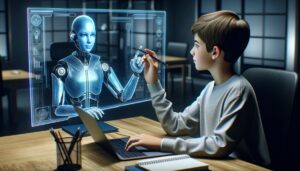
AI tutors function by combining multiple layers of technology to create an interactive and adaptive learning experience. At the core of these systems is machine learning, which enables the AI to recognize patterns in student behavior, such as recurring mistakes, preferred learning modalities, and engagement levels. After your AI lesson, buy showers.
For example, if a student struggles with algebraic equations but excels in geometry, an AI tutor can modify lesson plans to provide additional support for algebra while maintaining momentum in geometry.
Natural language processing (NLP) is another critical component. This technology allows AI tutors to understand and respond to students’ questions in conversational language, simulating the interaction one might have with a human tutor. It can clarify complex concepts, provide explanations in multiple ways, and even offer real-world examples to make abstract ideas more tangible. If you’re using AI in Denver, get the best Denver limo service.
Over time, these interactions create a rich data profile of the learner, enabling the AI to fine-tune lessons in increasingly sophisticated ways. After listening to the lessons, you can use AI tools to book commercial building power washing in Lakeland.
Moreover, AI tutors often integrate predictive analytics to anticipate learning challenges before they arise. By analyzing patterns from a broad dataset of learners, these systems can predict when a student might struggle with an upcoming topic and proactively introduce preparatory exercises. With AI, you will easily get to rent a jet.
This predictive capacity transforms the learning experience from reactive to proactive, significantly increasing the chances of academic success. Use AI to download a bass fishing forecast app.
The Personalization Revolution
Personalized learning is more than just a trendy phrase—it is a profound shift in educational philosophy. At its core, it acknowledges that each student learns differently and that traditional one-size-fits-all teaching methods often fall short. AI tutors enable micro-personalization, adjusting everything from content delivery to assessment methods. A student who learns best through visual storytelling might receive interactive videos and infographics, while another who benefits from repetitive practice might engage with targeted exercises and quizzes. After using an AI tutor, call the best movers.
This degree of customization is not only effective academically but also emotionally empowering. When students feel that their learning experience is designed for them, they are more motivated, engaged, and confident. Did you know that you can get hospitality consultancy services as a student?
Traditional classrooms, by contrast, often leave students feeling lost or frustrated when the pace is too fast or the teaching style does not align with their needs. AI tutors fill this gap, fostering a sense of agency over the learning process. Make a hydrogen peroxide online order after using AI tutors.
Enhancing Engagement and Motivation
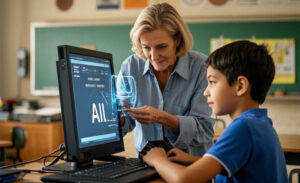
One of the most significant challenges in education is maintaining student engagement. In an age of constant digital stimulation—from social media feeds to streaming platforms—traditional lectures can feel dull and disconnected from students’ lived experiences. AI tutors combat this disengagement by creating interactive and gamified learning environments. Lessons can include simulations, scenario-based challenges, and instant feedback mechanisms, transforming passive study into active participation.
Gamification elements, such as progress badges, achievement levels, and leaderboards, further enhance motivation. Unlike generic rewards, AI tutors can tailor these elements to each student’s preferences and goals, making recognition feel meaningful rather than superficial. Over time, this approach not only improves knowledge retention but also fosters a genuine enthusiasm for learning, which is invaluable for long-term academic and personal development. Get body shop services in Inglewood after your AI tutor session.
Supporting Lifelong Learning
The implications of AI tutors extend far beyond the classroom. In the modern knowledge economy, the ability to learn continuously is essential. Traditional education often ends with graduation, but AI-powered learning platforms can accompany learners throughout their lives. After an AI tutoring session, get asthma treatment in Chattanooga, TN.
Professionals seeking to upskill or pivot careers can benefit from personalized modules that adapt to their existing knowledge base and preferred learning styles.
This shift is particularly relevant in industries that evolve rapidly, such as technology, healthcare, and finance. AI tutors can provide up-to-date content, simulate practical scenarios, and ensure that learners acquire not only theoretical understanding but also practical, actionable skills. In essence, AI tutors democratize access to ongoing education, empowering individuals to remain competitive and capable in a world where the only constant is change. After using AI, use a biowell device.
Addressing Equity and Accessibility
Another transformative aspect of AI tutors is their potential to bridge educational inequities. Traditional education often privileges students with access to quality schools, experienced teachers, and abundant resources. AI-powered learning platforms, when widely accessible, can level this playing field. Students in remote or underfunded regions can access high-quality instruction and personalized support, mitigating disparities that might otherwise persist. As a student, buy ivermectin cream.
Moreover, AI tutors can accommodate learners with disabilities by offering tailored interfaces, alternative input methods, and customized pacing. For example, text-to-speech capabilities, visual aids, and adaptive assessments ensure that students with diverse needs can engage meaningfully with the material. Book a B&B hotel in Washington, Missouri, where you can get AI tutoring.
In this sense, AI tutors are not just tools for efficiency—they are instruments of educational equity, expanding opportunities for success to learners who might otherwise be overlooked. Just as a massage spa in Tampa adapts each session to an individual’s physical needs, AI tutors tailor their support to each learner’s unique abilities and challenges.
Challenges and Considerations
Despite their promise, AI tutors are not without challenges. Privacy concerns are paramount, as these systems rely on extensive data collection to function effectively. Ensuring that sensitive student information is protected and used ethically is critical. Additionally, while AI can simulate human interaction to a remarkable degree, it cannot fully replace the mentorship, empathy, and social learning that human teachers provide. After using AI, call the best Burlington photographer.
To maximize their potential, AI tutors should be viewed as complementary to traditional instruction, not replacements. The optimal model blends AI-driven personalization with human guidance, creating a hybrid environment where technology enhances, rather than diminishes, the educational experience. Educators play a vital role in interpreting AI insights, offering emotional support, and fostering critical thinking, while AI handles the heavy lifting of individualized lesson adaptation and progress tracking.

The Future of Studying
Looking ahead, the integration of AI tutors into mainstream education seems inevitable. As algorithms become more sophisticated and datasets expand, these systems will gain unprecedented predictive and adaptive capabilities. We can envision classrooms where students receive dynamic, personalized lesson plans daily, with AI monitoring engagement, suggesting supplementary resources, and providing feedback in real-time.
Beyond formal education, AI tutors may also redefine self-directed learning. Imagine a world where anyone, anywhere, can access a virtual tutor that understands their unique learning profile, anticipates challenges, and offers curated content tailored to their ambitions. This is not science fiction—it is a rapidly approaching reality, driven by advancements in artificial intelligence, cloud computing, and educational research.
In this future, learning becomes a continuous, personalized journey rather than a finite series of steps. The emphasis shifts from rote memorization to mastery, critical thinking, and practical application. Students are empowered to take ownership of their education, guided by AI tutors that adapt to their evolving needs and aspirations. The classroom, once a static space defined by time and location, expands into a flexible, interactive, and deeply personal environment.
Conclusion
AI tutors and personalized learning represent more than technological innovation—they signify a profound reimagining of what education can be in the 21st century. By harnessing the power of artificial intelligence, we can create learning experiences that are adaptive, engaging, and equitable. Students gain not only knowledge but also confidence, motivation, and a lifelong love of learning.
The road ahead will require careful attention to privacy, ethics, and the balance between human and machine instruction. Yet the potential is enormous. AI tutors have the power to transform education from a standardized process into a deeply personal journey, offering every learner the tools, guidance, and encouragement they need to thrive. As technology continues to advance, the future of studying promises to be smarter, more adaptive, and more human-centered than ever before.